


Wanneer we nadenken over het kiezen van kunst voor een ruimte, denken we meestal aan kleur, formaat, textuur en het gevoel dat een werk bij ons oproept. Maar textielkunst kan invloed hebben op een ander aspect dat vaak over het hoofd wordt gezien: hoe de ruimte klinkt.
Ruimtes vol harde oppervlakken zoals glas, beton, steen, pleisterwerk en hout kunnen er visueel prachtig uitzien, maar akoestisch behoorlijk hard aanvoelen. Gesprekken kaatsen door de ruimte, voetstappen klinken luider en alledaagse geluiden kunnen een onaangename echo veroorzaken.
Dit is een van de redenen waarom ik graag met vezels werk. Naast het toevoegen van warmte, textuur en diepte aan een interieur, kan textiel kunst ook helpen om echo's te verminderen en de akoestische kwaliteit van een ruimte te verbeteren.


Waarom klinken sommige ruimtes zo galmend?
Geluid beweegt zich door een ruimte en dat heeft een wisselwerking met alles wat het tegenkomt. Harde, gladde oppervlakken weerkaatsen veel van dat geluid terug de ruimte in. Wanneer er veel reflecterende oppervlakken zijn, kunnen die reflecties zich opstapelen en een ruimte luidruchtig, hol of galmend laten aanvoelen.
Dit valt vooral op in moderne interieurs met grote ramen, hoge plafonds, betonnen vloeren en minimalistische meubels. De visuele eenvoud kan prachtig zijn, maar er zijn mogelijk relatief weinig zachte oppervlakken om al die geluidsreflecties te helpen beheersen.
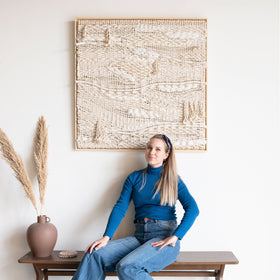
Textiel toevoegen is een manier om zachtere en onregelmatigere oppervlakken in zo'n ruimte te introduceren. Tapijten, gordijnen en gestoffeerde meubels kunnen allemaal bijdragen, en ook textiel kunst aan de wand kan dit doen, terwijl het tegelijkertijd ook een prachtige blikvanger in het interieur is.
Hoe helpt textiele wandkunst de akoestiek in een ruimte te verbeteren?
In tegenstelling tot een vlakke print, poster of foto, is textielkunst gemaakt van lagen zachte, gestructureerde materialen. Afhankelijk van het kunstwerk werk ik met materialen zoals katoen, wol, linnen, bamboe en andere natuurlijke vezels.
Deze vezels creëren, in combinatie met de driedimensionale constructie van het werk, een oppervlak dat veel minder hard en reflecterend is dan een kale muur. Een deel van de geluidsenergie die het kunstwerk bereikt word geabsorbeerd in plaats van recht de ruimte in te worden teruggekaatst.
Het resultaat is een ruimte die zachter, rustiger en akoestisch comfortabeler aanvoelt.


Akoestiek verbeteren is niet hetzelfde als geluidsisolatie
Textielkunst kan helpen reflecties en nagalm binnen een ruimte te verminderen, maar is niet ontworpen om te voorkomen dat geluid door muren naar een andere kamer reist. Als structurele geluidsisolatie nodig is, blijft gespecialiseerde akoestische constructie noodzakelijk.
Akoestische wandkunst zonder het uiterlijk van een akoestisch paneel
Traditionele akoestische behandelingen zien er vaak erg functioneel uit. Ze kunnen perfect werken in een opnamestudio of technische omgeving, maar zijn niet altijd wat je boven de bank wilt hangen.
Voor mij is textiel kunst juist daarom bijzonder interessant.
Een origineel textielkunstwerk kan een wand kleur, beweging, textuur en persoonlijkheid geven en tegelijkertijd een groot oppervlak zacht materiaal in de ruimte introduceren.
Je hoeft niet per se te kiezen tussen prachtige wandkunst en een zachtere akoestische omgeving.
Maakt het formaat van akoestische wandkunst verschil?
Ja. Wanneer akoestiek een belangrijke overweging is, doet de de grootte van een werk er toe.
Een kleiner kunstwerk kan warmte en zachtheid toevoegen, maar een textielkunstwerk of installatie op groot formaat bedekt aanzienlijk meer van een kale en geluid reflecterende wand.
Dit is een van de redenen waarom textielkunst bijzonder goed werkt als opvallende kunst op groot formaat. Grote wandkleden, ingelijste werken, tweeluiken en installaties met meerdere panelen kunnen aanzienlijke oppervlakken tactiel materiaal introduceren zonder dat de ruimte eruitziet als een akoestisch behandelde studio.
Het exacte effect hangt altijd af van de ruimte zelf, waaronder de afmetingen, plafondhoogte, inrichting, materialen, plaatsing van het kunstwerk en de constructie van het kunstwerk zelf.
Waar kan geluidsabsorberende wandkunst het grootste verschil maken?
Ik gebruik textielkunst vooral graag in ruimtes waar mensen veel tijd doorbrengen. Dit zijn ook vaak de kamers waar een onaangename echo of galm het meest opvalt.
- Woonkamers met grote ramen, hoge plafonds of harde vloeren
- Eetkamers waar gesprekken luid kunnen worden wanneer meerdere mensen samen zijn
- Slaapkamers waar een zachtere akoestische omgeving bijdraagt aan een rustigere sfeer
- Thuiswerkplekken en vergaderruimtes die worden gebruikt voor telefoongesprekken en gesprekken
- Kantoorruimtes met glas, beton en grote open ruimtes
- Hotels en horeca interieurs waar akoestisch comfort bijdraagt aan de algehele gastervaring
- Restaurants en gemeenschappelijke ruimtes waar veel stemmen tegelijk te horen zijn


Waarom textuur en diepte zo belangrijk zijn in mijn werk
Textuur vormt altijd het hart van mijn werk als textielkunstenaar.
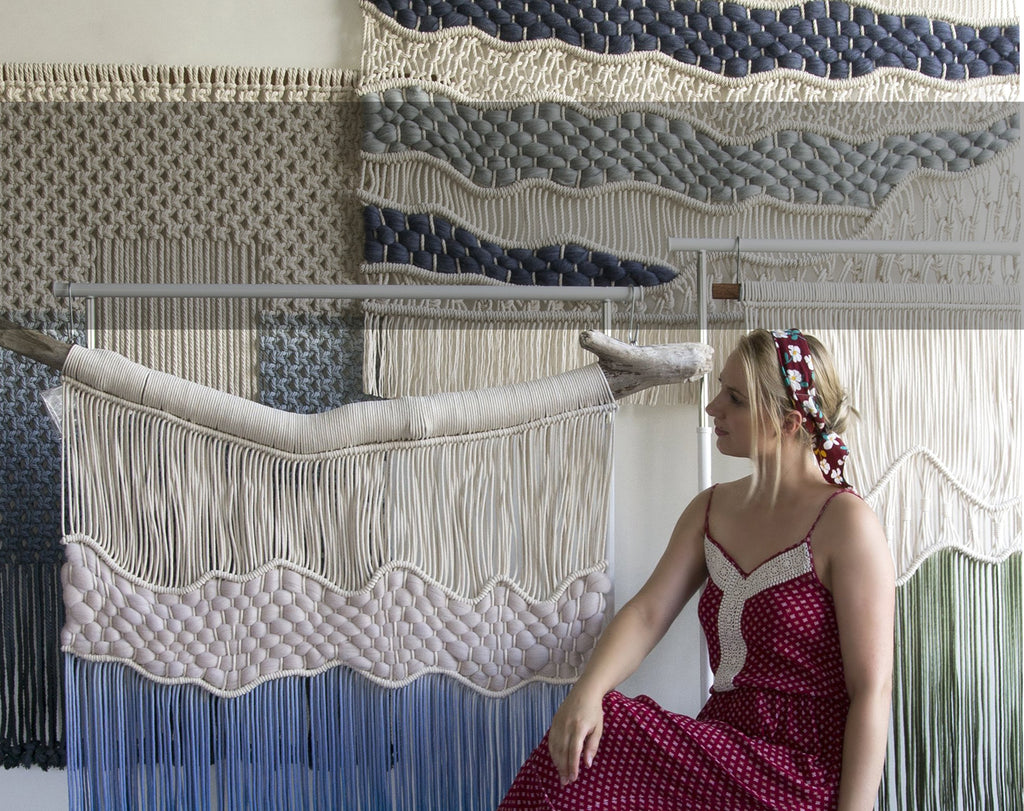
Ik maak mijn kunstwerken met de hand, met combinaties van knopen, weven, verven en werken in lagen. Daardoor heeft elk werk een fysieke diepte die een print of een traditionele vlak kunstwerk simpelweg niet heeft.
Visueel zorgt dit voor schaduwen en beweging die in de loop van de dag veranderen afhankelijk van hoe het licht erop valt. Akoestisch gezien betekenen al die vezels en onregelmatige oppervlakken ook dat de muur niet langer simpelweg één groot, glad en reflecterend vlak is.
Akoestische kunst op maat voor grote interieurs
Omdat elk interieur anders is, maak ik ook textiele wandkunst op maat met specifieke afmetingen, kleuren, materialen en composities.
In plaats van een relatief klein decoratief werk op een zeer grote muur te plaatsen, kan ik een kunstwerk maken dat bewust is afgestemd op de architectuur van de ruimte.
Voor grotere projecten werk ik regelmatig samen met huiseigenaren, interieurontwerpers en kunstadviseurs om unieke textielkunstwerken te maken voor woningen, horeca- en commerciële interieurs.

De afmetingen, het kleurenpalet, de materialen en de algehele compositie kunnen allemaal op het project worden afgestemd. Zo kan een aanzienlijke hoeveelheid textiel in een interieur worden geïntegreerd, terwijl het kunstwerk aanvoelt als een bewust onderdeel van het ontwerp in plaats van als een technische toevoeging.
Lees meer over het laten maken van een kunstwerk van textiel op maat →
Kan textielkunst professionele akoestische behandeling vervangen?
Dat hangt ervan af wat je probeert te bereiken.
Als je een opnamestudio, auditorium of andere ruimte ontwerpt waarvoor meetbare akoestische prestaties over specifieke frequenties vereist zijn, werk dan samen met een akoestisch specialist en gebruik producten die daarvoor zijn getest.
Mijn textielkunstwerken zijn in de eerste plaats originele kunstwerken. Ze worden momenteel niet verkocht met een akoestische classificatie die in een laboratorium is getest, maar ze zullen absoluut bijdragen aan een verbeterde akoestiek.
Het toevoegen van grote werken met zacht textiel is een mooie manier om bij te dragen aan een aangenamere akoestische omgeving. Dat geldt voor een woning, kantoor, hotelkamer of andere ruimte.
Veelgestelde vragen over akoestische wandkunst
Absorbeert textielkunst geluid?
Textiel en andere poreuze materialen kunnen een deel van de geluidsenergie absorberen die erop terechtkomt. Hoeveel dat is, hangt af van factoren zoals het type en de dikte van het materiaal, de constructie van het kunstwerk, de grootte en de positie ervan in de ruimte.
Kan textiel kunst echo verminderen?
Textielkunst kan geluidsreflecties in een interieur helpen verzachten. In ruimtes die worden gedomineerd door harde, reflecterende oppervlakken kan het toevoegen van grote oppervlakken van zacht en gestructureerd materiaal bijdragen aan een minder galmende en comfortabelere akoestische omgeving.
Is akoestische wandkunst hetzelfde als geluidsisolatie?
Nee. Akoestische behandeling richt zich voornamelijk op de manier waarop geluid zich in een ruimte gedraagt. Geluidsisolatie is bedoeld om te voorkomen dat geluid zich tussen ruimtes of gebouwen verplaatst. Kunstwerken van touw en textiel kunnen reflecties binnen een ruimte helpen verzachten, maar vervangt geen structurele geluidsisolatie.
Is grotere textielkunst beter voor de akoestiek in een ruimte?
Als akoestiek een van de redenen is waarom je voor textielkunst kiest, brengen grotere werken meer zacht oppervlak in de ruimte dan kleinere werken. Het totale effect hangt nog steeds af van het kunstwerk, de constructie, de ruimte en de plaatsing.
Kun je akoestische wandkunst op maat maken?
Ja. Ik maak textielkunstwerken op maat met afmetingen, verhoudingen en kleuren die specifiek op een interieur zijn afgestemd. Als het verbeteren van de akoestiek van een ruimte een van je doelen is, vermeld dit dan wanneer je je opdracht aanvraagt, zodat schaal, materialen en plaatsing als onderdeel van het project kunnen worden meegenomen.
Is textielwandkunst geschikt voor kantoren en commerciële interieurs?
Ja. Grote textielkunstwerken en kunstinstallaties kunnen bijzonder goed werken in kantoren, vergaderruimtes, hotels en horecaruimtes waar het interieur veel glas, steen, beton of andere harde materialen bevat. Naast het creëren van een visueel middelpunt brengen de vezels zachtheid, warmte en textuur in de ruimte.
Kunst die verandert hoe een ruimte eruitziet en aanvoelt
Ik heb altijd van textiel en vezels gehouden omdat ze iets tastbaars en menselijks aan een interieur toevoegen. Ze verzachten de architectuur, vangen het licht en creëren een gevoel van warmte dat moeilijk met een vlak beeld te bereiken is.
Dat textielkunst ook kan bijdragen aan een zachtere akoestische omgeving maakt het voor mij nog interessanter, vooral nu hedendaagse interieurs steeds vaker open indelingen combineren met harde architecturale materialen.
Als je op zoek bent naar akoestische wandkunst, geluidsabsorberende wandkunst, grootschalige textielkunst of een textielkunstwerk op maat dat in de eerste plaats als kunst aanvoelt en pas daarna als akoestische oplossing, maak ik graag iets speciaal voor jouw ruimte.

Rianne Aarts
Textielkunstenaar en oprichter van Teddy and Wool